
Are Aga Stoves Energy Efficient? The Honest Truth

The short answer is: modern controllable Agas are reasonably energy efficient, but traditional always-on models are not. A new electric Aga with programmable settings uses around 30-40% less energy than older models, while traditional oil or gas Agas that run constantly can use 3-5 times more energy than a conventional cooker.
We've removed hundreds of Agas over the years, and energy efficiency is the number one reason people give for switching. But the picture isn't as simple as "Agas waste energy", it depends entirely on which type you have and how you use it.
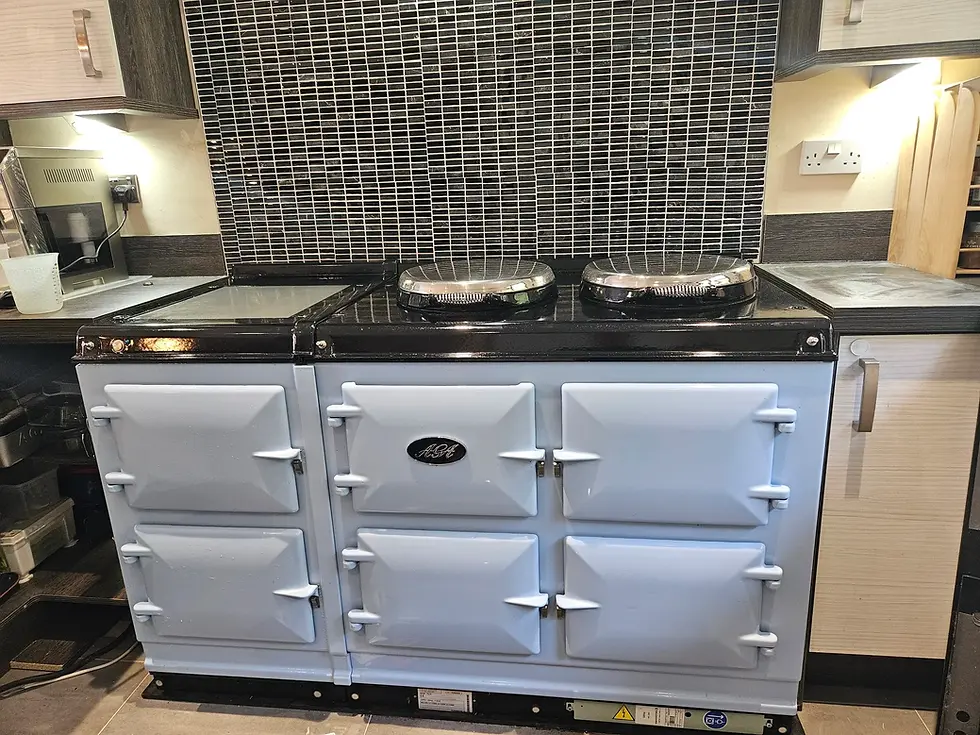
How Efficient Are Traditional Agas?
Traditional Agas, the ones that stay on 24/7, are not energy efficient by modern standards. They're designed to maintain constant heat, which means they're burning fuel or using electricity even when you're not cooking.
A traditional two-oven oil Aga uses approximately 2,650 litres of oil per year. At current prices, that's a significant running cost compared to using a conventional cooker only when needed. Gas models fare slightly better but still consume fuel continuously.
The efficiency rating of these older models typically sits around 40-50%, meaning half the energy goes up the flue or into heating your kitchen. Compare that to a modern induction hob at 90% efficiency, and you can see why many homeowners are reconsidering.
What About Modern Controllable Agas?
Here's where things get more interesting. Since 2011, Aga has introduced various controllable models that you can turn on and off as needed. These include the Total Control, Dual Control, and newer electric models with programmable settings.
Controllable electric Agas are the most efficient option, with some models achieving 95% efficiency when in use. You can programme them to heat up for meal times and switch off overnight or when you're away. Weekly running costs for these models average £20-30, depending on your usage patterns.
The key difference is that you're only paying for energy when you need it, not maintaining heat around the clock.
Comparing Fuel Types and Efficiency
Different fuel types offer vastly different efficiency levels:
Electric Agas (controllable models): Most efficient at 95%+ when operating, with precise temperature control and no wasted heat up a flue. If you're considering switching, you might wonder can you convert gas aga to electric, it's possible but requires professional installation.
Gas Agas: Around 70% efficient for newer models, but traditional always-on versions drop to 40-50%. Gas burns cleanly, and if you notice issues with efficiency, check what colour should aga flame be to ensure proper combustion.
Oil Agas: Generally the least efficient at 40-50%, though newer condensing models can reach 80%. Oil prices fluctuate significantly, making running costs unpredictable.
Solid fuel models: Efficiency varies wildly depending on the quality of fuel and how well you manage the fire. Generally not recommended if efficiency is your priority.
Real-World Energy Usage
Let's talk actual numbers. A traditional two-oven gas Aga uses approximately 48 kWh per day when running constantly. That's roughly 17,500 kWh annually.
By comparison, a typical family using a conventional gas cooker might use 500-700 kWh per year for cooking. Even accounting for the Aga's role in heating the kitchen, that's a substantial difference.
Modern controllable models tell a different story. An electric Total Control Aga used for two meals daily might consume 3,500-5,000 kWh annually, still more than a standard cooker but far more reasonable than traditional models.
Does the Heat Output Offset the Cost?
Many Aga owners argue that their cooker doubles as kitchen heating, making it more efficient overall. There's some truth to this, particularly in older homes with large kitchens.
A traditional Aga pumps out around 1.5-3kW of heat continuously. In winter, this can reduce your central heating needs. However, in summer, you're paying to heat a room you're probably trying to keep cool.
The how hot is the bottom oven of an aga affects how much ambient heat escapes into your kitchen. Traditional models can make kitchens uncomfortably warm in summer, while controllable models give you the option to switch off.
Tips for Improving Your Aga's Efficiency
If you're keeping your Aga, here's how to maximise its efficiency:
Service annually: A well-maintained Aga runs more efficiently. Carbon buildup and worn parts waste energy.
Check door seals: Worn seals let heat escape. Replacement seals are relatively inexpensive.
Use the ovens correctly: Cook multiple items together to maximise each heating cycle.
Consider a programmable model: If you have an older electric Aga, upgrading to a controllable version could cut energy use by 30-40%.
Insulate your flue: For oil and gas models, proper flue insulation reduces heat loss.
Making the Decision
Whether an Aga is energy efficient enough for your home depends on your priorities. If you value the cooking experience, constant warmth, and traditional charm, a modern controllable model offers a reasonable compromise on efficiency.
But if minimising energy use is your top priority, even the most efficient Aga will use more power than a conventional cooker used sparingly.
Many of our customers switch from traditional to controllable models as a middle ground. Others decide to remove their Aga entirely in favour of more efficient alternatives. There's no right answer, just what works for your household, budget, and values.
The Environmental Angle
Beyond personal energy costs, there's the environmental impact to consider. Older Agas, particularly oil-fired models, produce significant CO2 emissions. A traditional oil Aga generates approximately 6-7 tonnes of CO2 annually.
Electric models powered by renewable energy or heat pumps offer the greenest option. Some owners even successfully run their electric Agas on solar power, though this requires substantial panel capacity.
Cast iron itself is highly recyclable, and Agas are built to last generations. When we remove an Aga, we ensure it goes to specialists who refurbish and resell them rather than scrapping them. This longevity partially offsets their higher energy use.


Comments