
Do Electric AGAs Heat the Room? The Real Answer from Experience

Yes, electric AGAs do heat the room, but nowhere near as much as traditional oil or gas models. We've removed hundreds of electric AGAs over the years, and homeowners consistently tell us the same thing: they give off a gentle background warmth rather than the intense radiant heat you'd get from a conventional AGA.
The heat output varies dramatically between models. A 13amp electric AGA barely warms the kitchen, whilst a 30amp model or newer eR series puts out enough to take the chill off a medium-sized room. But if you're expecting to heat your whole house like traditional AGAs can, you'll be disappointed.
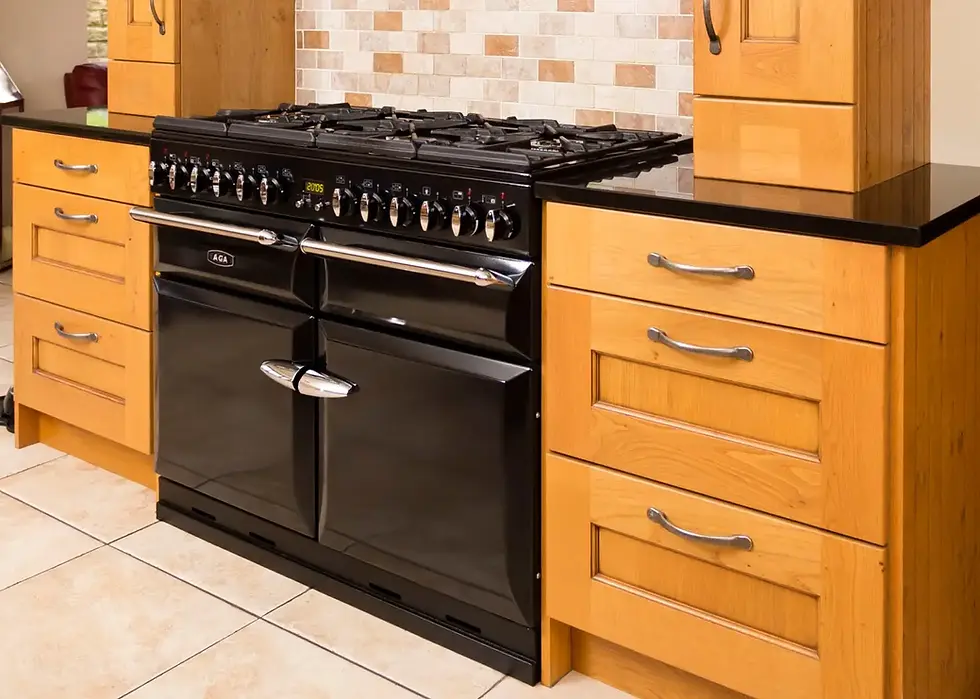
How Much Heat Does an Electric AGA Actually Produce?
Electric AGAs release between 0.5kW and 2.5kW of heat into your room, depending on the model and how you're using it. To put that in perspective, a typical electric radiator runs at 1-2kW, so you're getting similar heat output to having one extra radiator in your kitchen.
The older 13amp models give off the least heat, around 0.5-0.8kW constantly. That's barely noticeable in winter.
The 30amp electric AGAs manage about 1-1.5kW of ambient heat. You'll feel it if you're working near the cooker, but it won't warm the whole kitchen.
The newer eR and R series models are more efficient but also retain more heat internally. They release roughly 1-2kW into the room when fully heated, rising to 2.5kW when you're actively cooking.
Electric AGA Models and Their Room Heating Capacity
13amp Electric AGAs
These plug into a standard socket and are the coolest-running AGAs we encounter. In our experience removing them, owners often say they barely noticed any room heating effect at all. The cast iron never gets properly hot to the touch, and the heat output is minimal.
One customer in Surrey told us she'd specifically chosen the 13amp model because her old oil AGA made the kitchen unbearably hot in summer. The electric version solved that problem completely, perhaps too well, as she ended up needing extra heating in winter.
30amp Electric AGAs
The 30amp models need proper electrical installation but do generate more noticeable warmth. We typically find these in larger kitchens where they provide gentle background heating equivalent to a small radiator.
They won't heat adjoining rooms, and you'll still need your central heating on in winter. But standing next to one on a cold morning, you'll definitely feel the warmth radiating from the hotplates and ovens.
eR Series (Electric Radiant)
AGA's eR models try to recreate more of the traditional radiant heat whilst offering electric convenience. The cast iron reaches higher temperatures than basic electric models, and heat loss to the room increases to around 2kW continuous.
We've removed several eR7 models where owners reported them keeping smaller kitchens comfortably warm. But in larger spaces or open-plan areas, the heating effect dissipates quickly.
R Series Electric
The newest R series AGAs are the most energy-efficient, which ironically means less wasted heat into your room. They're designed to put heat where you need it, in the ovens and on the hotplates, not into the surrounding air.
These models can boost up to 2.5kW room heating when you're actively cooking, but drop back to under 1kW on standby. Owners switching from traditional AGAs often find their kitchens noticeably cooler.
Real Examples: How Electric AGAs Perform in Different Kitchens
We've seen electric AGAs in every type of property imaginable. Here's what actually happens in real homes.
Small galley kitchen (under 15m²): A 30amp or eR model will keep this space noticeably warmer. One customer in Bath said her eR3 kept her narrow kitchen "perfectly toasty" without any radiators on during spring and autumn.
Standard family kitchen (20-30m²): You'll feel localised warmth near the AGA but won't notice much difference at the breakfast table. Most customers keep their radiators on as normal. The AGA adds comfort but isn't a primary heat source.
Open-plan kitchen-diners (40m²+): The heating effect becomes negligible. We removed a 30amp model from a barn conversion where the owners said they couldn't feel any warmth beyond a metre from the cooker.
Traditional farmhouse kitchens with low ceilings: These retain heat best. An eR7 in a cottage kitchen with exposed beams can create a noticeably warmer environment, though still nothing like an oil AGA would manage.
Running Costs vs Heat Output
Here's what catches people out: electric AGAs cost more to run than gas or oil models, but provide far less heat to your room. It seems counterintuitive, but it's because they're more efficient at containing heat where it's needed for cooking.
Current 2024 electricity prices mean running costs of:
13amp models: £15-20 per week
30amp models: £25-35 per week
eR series: £30-45 per week
R series: £20-30 per week (with smart programming)
You're paying similar money to traditional models but getting a fraction of the room heating. We've written more about are AGAs expensive to run if you want detailed running cost breakdowns.
Do You Need Extra Heating With an Electric AGA?
Almost certainly yes. We've removed electric AGAs from hundreds of homes, and virtually all had radiators or underfloor heating in the kitchen too.
The only exceptions we've seen are:
Very small kitchens where the AGA fills most of one wall
Super-insulated new builds where minimal heating is needed anyway
Kitchens with additional heat sources like wood burners
Unlike traditional AGAs that genuinely can heat multiple rooms (covered in our post on does an AGA heat the house), electric models are cooking appliances that happen to emit some warmth, not heating systems that happen to cook.
Ventilation Considerations
Because electric AGAs produce less ambient heat, you might think ventilation is less critical. Actually, you still need proper extraction for cooking vapours and moisture, even though the heat output is lower.
The reduced room heating can actually make condensation worse in poorly ventilated kitchens. We explain requirements fully in our article about do AGAs need extractor fans.
Unlike gas or oil models, electric AGAs need no flue for combustion gases, which gives you more installation flexibility.
The Verdict from Years of Removals
After handling hundreds of electric AGA removals, we can say definitively: yes, they heat the room, but not enough to rely on as a heat source. Think of the warmth as a pleasant bonus rather than a heating solution.
Customers switching from oil or gas AGAs are often shocked by how much cooler their kitchens become. Those installing their first AGA generally appreciate the gentle warmth without the overwhelming heat of traditional models.
The key differences we see:
Oil/gas AGAs: Can heat 2-3 rooms effectively
Electric AGAs: Provide localised warmth in one room only
Heat output: 0.5-2.5kW for electric vs 3-12kW for traditional
Running costs: Similar weekly costs but very different heat output
Summer comfort: Electric models don't overheat kitchens
If you're buying an electric AGA expecting it to warm your kitchen like a traditional model, you'll be disappointed. If you want a superb cooking appliance that takes the edge off a chilly morning without overheating in summer, you'll be delighted.


Comments